Ahlmann Hydraulic Breakers for Sale | Find the Perfect Match for Your Model
2026-10-27

Indonesia has a large and diverse market for construction equipment. Road construction, quarrying, mining, demolition, infrastructure development, and site preparation all create demand for excavator attachments, including hydraulic hammer breakers.
For Indonesian importers, distributors, equipment dealers, rental fleets, and contractors, sourcing hydraulic hammer breakers from China can provide access to a wide range of models and configurations. However, buying directly from a Chinese manufacturer involves more than comparing product prices.
The breaker must match the excavator’s hydraulic system, operating weight, application, and working conditions. Buyers also need to evaluate manufacturing capability, spare parts availability, warranty terms, shipping arrangements, and technical support.
This guide explains what Indonesian buyers should consider when purchasing hydraulic hammer breakers from China and how to reduce the risks associated with overseas sourcing.
China has become an important manufacturing base for hydraulic attachments and construction machinery components. Chinese hydraulic breaker manufacturers supply products for excavators ranging from mini machines to large mining excavators.
For Indonesian buyers, several factors can make Chinese suppliers worth considering.
Chinese manufacturers commonly offer hydraulic breakers for different excavator classes, including:
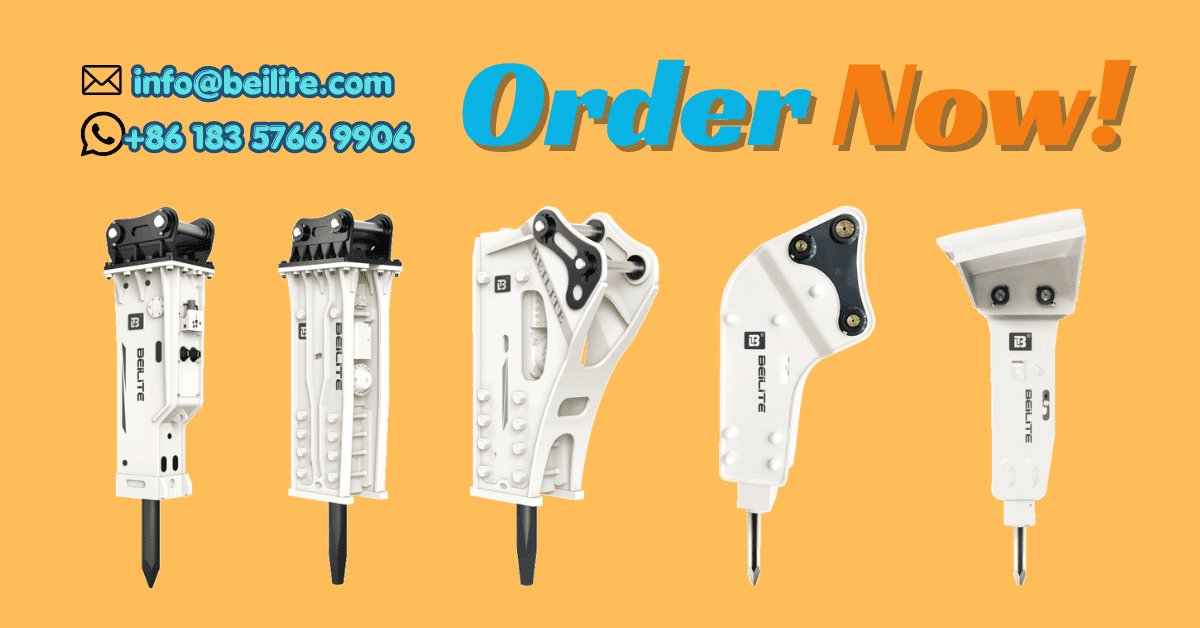
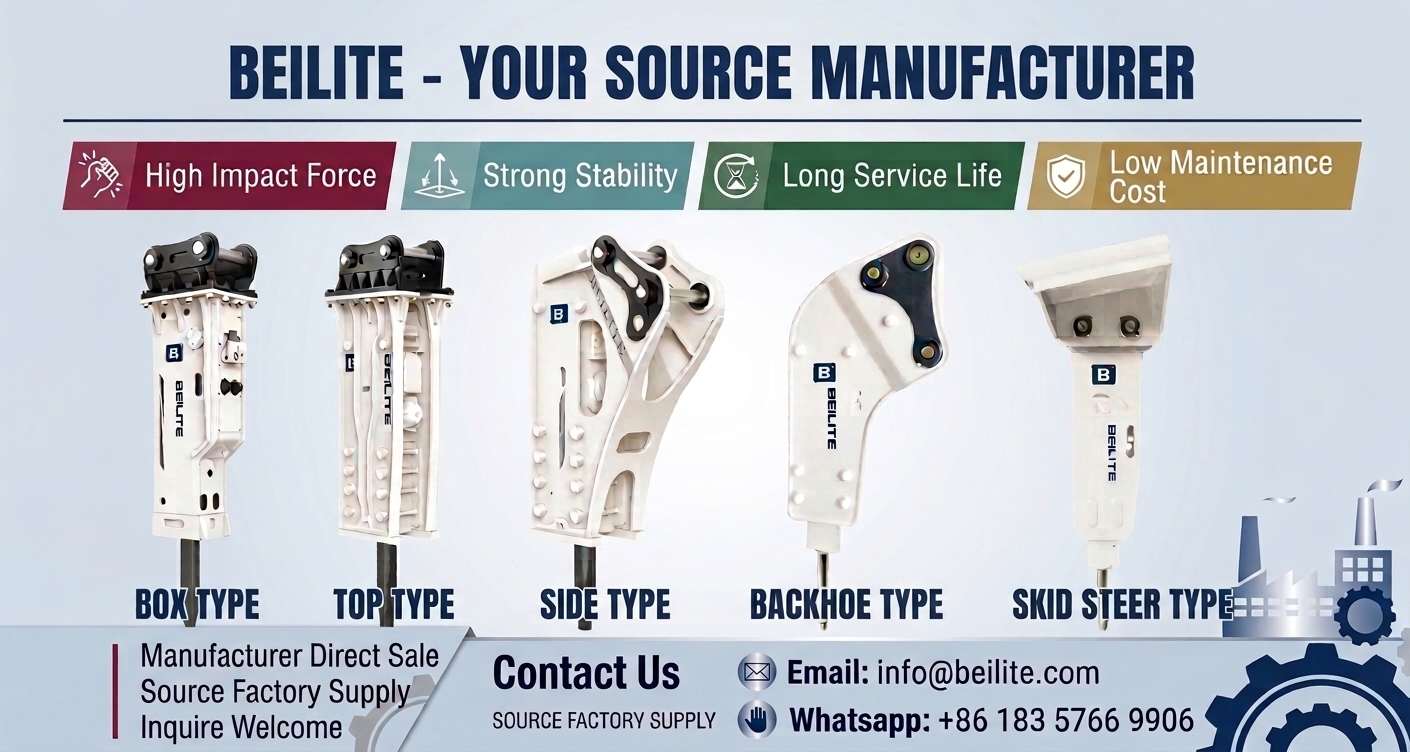
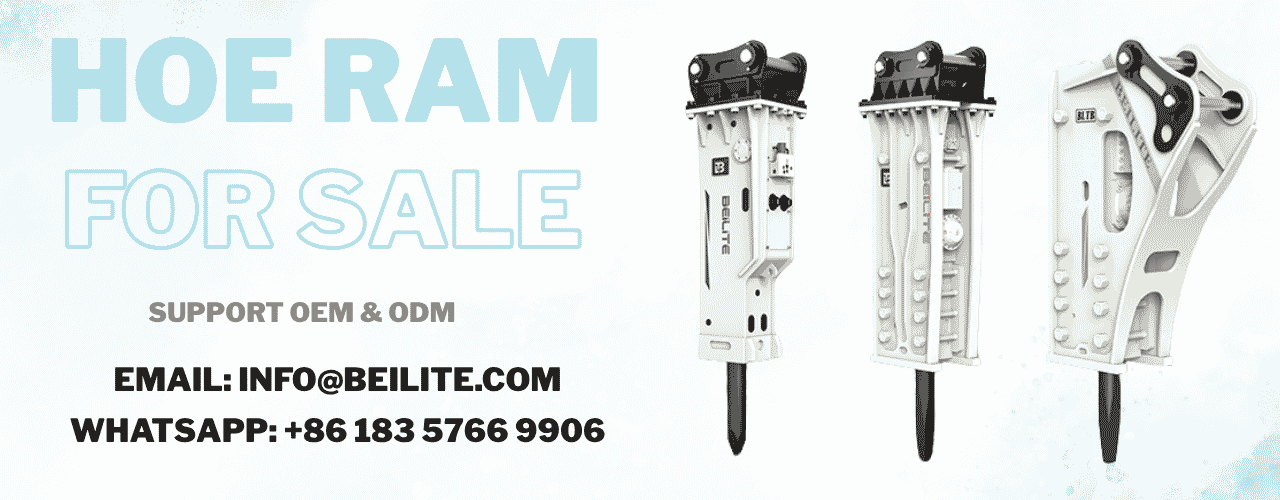
Some manufacturers also supply hydraulic breakers for backhoes and skid steer loaders. For example, Beilite offers a full range of hydraulic breakers compatible with excavators from 0.5 to 350 tons across major equipment brands. It offers box type hydraulic hammer, top mounted hydraulic hammer, side-mounted hydraulic hammer, and hydraulic hammer for backhoe and hydraulic hammer for skid steer loader.
For distributors, purchasing multiple breaker sizes from one manufacturer can simplify product management and allow them to serve customers operating different excavator brands and classes.
OEM capability is another reason Indonesian distributors may source hydraulic hammer breakers from China.
Depending on the manufacturer, OEM programs may include customized:
This can be useful for equipment dealers and attachment distributors that want to develop their own product lines rather than sell under a manufacturer’s brand.
Different jobs require different breaker configurations. Depending on the application, buyers may need standard, silent, side-mounted, top-mounted, or heavy-duty hydraulic breakers.
A manufacturer with a broad production range can provide different configurations while maintaining a common supply relationship.
However, buyers should not assume that every configuration is suitable for every Indonesian jobsite. Product selection still needs to start with the excavator and application.
Recommended Reading: How to Reduce Cost When Buying Hydraulic Breakers in Bulk: A Complete B2B Guide
Choosing a hydraulic hammer breaker starts with excavator compatibility.
Excavator operating weight is one of the first specifications to check.
A general starting point is:
| Excavator Operating Weight | Typical Breaker Category |
| 0.5–2 tons | Mini hydraulic breaker |
| 2–4 tons | Compact hydraulic breaker |
| 4–6 tons | Small hydraulic breaker |
| 6–9 tons | Medium hydraulic breaker |
| 10–14 tons | Medium/heavy hydraulic breaker |
| 20–30 tons | Heavy-duty hydraulic breaker |
| 30+ tons | Heavy-duty or mining breaker |
These ranges are only a starting reference. The actual selection must also consider hydraulic flow, operating pressure, mounting dimensions, application, and manufacturer recommendations.
A breaker that matches the excavator by weight but exceeds the machine’s hydraulic capacity may not operate correctly. Contact BEILITE for a Hydraulic Hammer Model Recommendation.
Hydraulic compatibility is critical.
Before placing an order, Indonesian buyers should confirm:
For example, two excavators with similar operating weights may have different auxiliary hydraulic specifications. As a result, the same breaker may not be suitable for both machines without checking the hydraulic requirements.
A supplier should provide the required flow and pressure range for the specific breaker model.
The chisel diameter is another important specification.
Larger tools are generally associated with larger breaker classes, but selecting a breaker should not be based on chisel size alone.
Buyers should consider:
The objective is to match the breaker to the work rather than simply select the largest available model.
Recommended Reading: Standard-Flow vs High-Flow Skid Steer Breaker: Which Is Better?
Indonesian buyers should also determine whether their application requires a standard-duty or heavy-duty hydraulic hammer breaker.
Standard-duty breakers can be suitable for applications such as:
They can be a practical choice when the breaker is not expected to operate continuously against very hard rock.
Heavy-duty breakers are intended for more demanding applications, such as:
A heavy-duty breaker can be appropriate when the machine will face high workloads and hard materials for extended periods.
However, choosing a heavy-duty breaker for every application is not necessarily beneficial. A larger breaker may increase acquisition, transportation, and maintenance costs without providing a practical advantage for lighter work.
The application should determine the breaker class.
Recommended Reading: Is Higher BPM Always Better for Hydraulic Breakers?
Before requesting a quotation, prepare the technical information that the manufacturer needs.
Provide:
If possible, provide photographs of the excavator’s arm and hydraulic connections.
Explain what the breaker will be used for.
For example:
“The breaker will be installed on a 20-ton excavator for limestone quarrying.”
This is much more useful than simply asking for a “20-ton hydraulic hammer.”
The supplier should also understand the working environment.
Relevant information may include:
This information helps the manufacturer recommend an appropriate breaker configuration.
Ask the supplier for:
Do not rely only on a product name such as “100-type” or “140-type.” Different manufacturers may use different naming systems.
The mounting bracket must match the excavator.
Confirm:
If the dimensions are uncertain, provide drawings, measurements, or photographs to the manufacturer before production.
Recommended Reading: Hydraulic Breaker Manufacturer for Large Projects: What Buyers Should Know
The price of a hydraulic hammer breaker from China can vary significantly depending on its size, configuration, specifications, and application.
Instead of looking for one universal price, buyers should understand the factors that affect the total cost.
Larger breakers generally require more material, larger components, and greater manufacturing capacity.
A mini excavator breaker and a heavy-duty breaker for a 30-ton excavator should not be compared only by their quoted unit prices.
The configuration can also affect the price.
Examples include:
Additional accessories and customized mounting brackets can also change the quotation.
A quotation may or may not include:
Always confirm exactly what is included before comparing quotations from different suppliers.
The purchase price is only one component of the final cost.
Indonesian buyers should consider:
Total Landed Cost = Product Price + Freight + Insurance + Import Costs + Local Handling + Spare Parts + After-Sales Costs
A supplier with a lower factory price may not necessarily produce a lower total procurement cost if shipping, spare parts, or after-sales support are less favorable.
Recommended Reading: Where to Find the Best Quality Hydraulic Breaker Manufacturer?
International suppliers may quote hydraulic breakers under different Incoterms.
Common options include:
Under EXW, the buyer generally takes responsibility for arranging transportation from the supplier’s facility.
This can be suitable for experienced importers with their own logistics arrangements.
Under FOB, the seller handles the required export-side arrangements up to the agreed loading point, while the buyer generally arranges the main transportation.
Under CIF, the seller generally arranges the main sea freight and insurance to the named destination port.
When comparing quotations, make sure the shipping terms are the same. Comparing an EXW quotation with a CIF quotation without accounting for the additional costs can create a misleading price comparison.
Buyers should also confirm:
For Indonesia, it is also important to work with a qualified customs or logistics provider to confirm current import requirements before placing an order.
Recommended Reading:
Not every company advertising hydraulic breakers online has the same manufacturing capability.
Indonesian buyers should verify the supplier before placing a significant order.
Ask whether the company actually manufactures the breakers or primarily trades products from other factories.
Useful information includes:
Factory photographs are useful, but documentation and direct communication can provide additional evidence of manufacturing capability.
A professional hydraulic breaker manufacturer should be able to provide relevant technical information, such as:
Clear technical documentation can also reduce installation and maintenance problems after the breaker arrives in Indonesia.
For international buyers, export experience matters because international orders involve more than manufacturing.
Ask about:
A manufacturer familiar with international buyers is more likely to understand the documentation and communication requirements involved in overseas orders.
Before purchasing, ask:
These questions are particularly important for Indonesian distributors that need to support their own customers after the sale.
The lowest quotation does not automatically mean the lowest procurement cost.
A cheaper breaker can become expensive if it requires frequent replacement parts, creates downtime, or has limited technical support.
Excavator weight is important, but it is not enough.
Hydraulic flow, pressure, return-line pressure, mounting dimensions, and application must also be checked.
A breaker used for concrete demolition may have different requirements from one used for hard-rock quarrying.
Tell the supplier exactly what material the breaker will handle.
Before ordering, ask whether common wear parts are available separately.
Important components may include:
For distributors, having commonly required spare parts available can reduce customer downtime.
Do not assume that all manufacturers define warranty coverage in the same way.
Confirm:
Get these terms in writing before placing the order.
A breaker can be technically compatible with an excavator but still require a different mounting bracket.
Confirm the dimensions before manufacturing starts.
A structured purchasing process can reduce avoidable problems.
Before placing an order, confirm the following:
Excavator compatibility
Application
Breaker
Installation
Supplier
After-sales
Logistics
This checklist can help Indonesian buyers compare suppliers based on the complete procurement requirement rather than a single product price.
For Indonesian distributors and equipment dealers, buying from an OEM hydraulic breaker manufacturer can offer a different procurement model from buying through multiple trading companies.
An OEM manufacturer may be able to provide a broader product range, technical specifications, customized branding, and direct technical communication.
Distributors may look for:
Dealers often need breakers that cover different excavator classes.
A supplier offering models for mini, compact, medium, and heavy excavators can make product selection easier across different customer groups.
Rental companies should pay close attention to:
The lowest initial price is not necessarily the main consideration for a rental fleet. Downtime and maintenance requirements can have a significant impact on operating costs.
Contractors should focus on application matching.
A breaker should have suitable hydraulic requirements and impact characteristics for the materials encountered on the jobsite.
Recommended Reading: How to Reduce Cost When Buying Hydraulic Breakers in Bulk?
BEILITE Machinery is a China-based hydraulic breaker manufacturer serving international distributors, dealers, contractors, and OEM customers.
The company has manufactured hydraulic breakers since 2002 and offers models covering different excavator classes and applications, from compact equipment to heavy-duty machines.
Its product range includes hydraulic breakers for construction, demolition, quarrying, mining, municipal engineering, and other demanding applications.
For overseas buyers, the selection process starts with the carrier and application. Indonesian customers can provide the excavator brand and model, operating weight, hydraulic flow, hydraulic pressure, and intended application so the appropriate breaker model and mounting configuration can be evaluated.
For distributors and OEM buyers, the discussion can also cover product range, branding requirements, spare parts, packaging, and long-term supply needs.
Indonesia presents specific challenges for hydraulic breaker users, particularly in mining, quarrying, infrastructure construction, and large-scale earthmoving projects.
Mining and earthmoving projects in Indonesia often involve long mineral processing chains. Materials such as bauxite, nickel ore, iron ore, and limestone may require secondary breaking and intensive rock excavation before they can move to the next stage of processing.
At the same time, many Indonesian jobsites combine high temperatures, high humidity, heavy dust, and long operating hours. These conditions can place additional demands on hydraulic breakers and their wear components.
Under such conditions, component durability becomes an important factor in excavator uptime and operating cost. Hydraulic seals may age faster in high-temperature environments, bushings can experience accelerated wear, and improper thermal treatment or prolonged exposure to demanding working conditions can affect the service life of breaker tools. Cylinder and middle-body components may also be exposed to greater wear when the breaker is operated continuously in abrasive environments.
For contractors and mining equipment operators, these issues are not simply maintenance concerns. Frequent component replacement and unexpected downtime can directly affect excavator availability and the cost of breaking or moving each cubic meter of material.
For the Indonesian market, hydraulic breaker demand can generally be viewed across several application areas:
Each segment has different requirements. A breaker for urban concrete demolition, for example, does not necessarily require the same configuration as a breaker working continuously on hard rock in a nickel or limestone operation.
This makes application-based breaker selection particularly important for Indonesian buyers.
BEILITE has positioned its Indonesian business around three priorities: high-end products, product quality, and localized service.
One focus is on demanding product categories where engineering and component durability are particularly important, including large hydraulic breakers and specialized breakers designed for high-temperature working conditions.
Rather than evaluating a breaker only by its initial purchase price, BEILITE focuses on measurable factors that matter to equipment owners and contractors, including product stability, service life, residual value, and maintenance requirements.
Local service is another important part of this approach.
BEILITE has established sales and service support in key Indonesian markets, including Jakarta, Morowali, Kendari, Palu, and Pontianak, with coverage extending across major regions including Java, Sulawesi, Kalimantan, and Sumatra.
The objective is to shorten the service distance between the manufacturer, distributor, and jobsite and provide support throughout the equipment lifecycle.
This support can cover:
For mining contractors and equipment operators, this creates a more complete support process—from initial breaker selection and commissioning to spare-parts planning and field service.
Indonesia’s mining and construction sectors require hydraulic breakers that can handle demanding materials and operating environments while maintaining predictable maintenance requirements.
For buyers comparing hydraulic hammer breakers from China, the supplier’s local support capability should therefore be evaluated alongside product specifications and purchase price.
A manufacturer with experience in Indonesian applications can provide more than a breaker. It can also contribute application knowledge, excavator matching, spare-parts planning, commissioning, and technical support throughout the product’s working life.
For Indonesian distributors, contractors, and mining companies, these factors can be particularly important when hydraulic breakers are expected to operate for long hours in remote or demanding jobsites.
Chinese hydraulic breakers are available in a wide range of configurations for construction, demolition, quarrying, mining, and other applications. Suitability depends on the individual manufacturer’s design, quality control, specifications, and the match between the breaker and the excavator.
Start with the excavator’s operating weight, hydraulic flow, hydraulic pressure, and mounting dimensions. Then consider the material, application, working hours, and required impact performance.
There is no single price because hydraulic breaker cost varies according to breaker size, configuration, materials, accessories, customization, and supplier specifications. Shipping and import-related costs should also be included when calculating the total landed cost.
At minimum, provide the excavator brand, model, operating weight, hydraulic flow, hydraulic pressure, application, and material to be broken. Photos or dimensions of the excavator arm and mounting area can also help confirm compatibility.
Check its factory and manufacturing capabilities, technical documentation, product specifications, export experience, quality management, warranty policy, and spare parts support. For larger orders, buyers can also consider factory audits or third-party inspections.
The decision depends on the application. Standard-duty breakers may be suitable for general construction and demolition, while heavy-duty breakers are designed for more demanding rock, quarrying, mining, and heavy demolition work.
Many Chinese manufacturers offer OEM or private-label programs. Buyers should confirm the available customization options, minimum order requirements, branding process, packaging, technical documentation, and production lead time with the individual manufacturer.



 Phone/ Whatsapp: +86 40008-40008
 Email: info@beilite.com


